
florrent’s supercapacitor cells and modules are a critical component when it comes to stabilizing the grid, improving data center performance, and protecting on-site power generation equipment. They also help the bottom line by radically increasing compute revenue streams.
We are in the midst of a once-in-a-century revamping of the world’s most critical infrastructure system: our electricity grid. From large transmission towers carrying electricity from centralized power plants thousands of miles away down to the smaller distribution networks connecting to each individual customer, this amazing machine is being reinvented before our very eyes.
Why now? After years of flat growth in electricity demand, consumption is spiking due to a multitude of factors, with data centers linked to increased use of artificial intelligence (AI) being the primary reason. These large and intensive consumers of round-the-clock electricity are the defining infrastructure challenge today. The rush to build out data centers is shattering previous growth trend records for forecasted energy use.
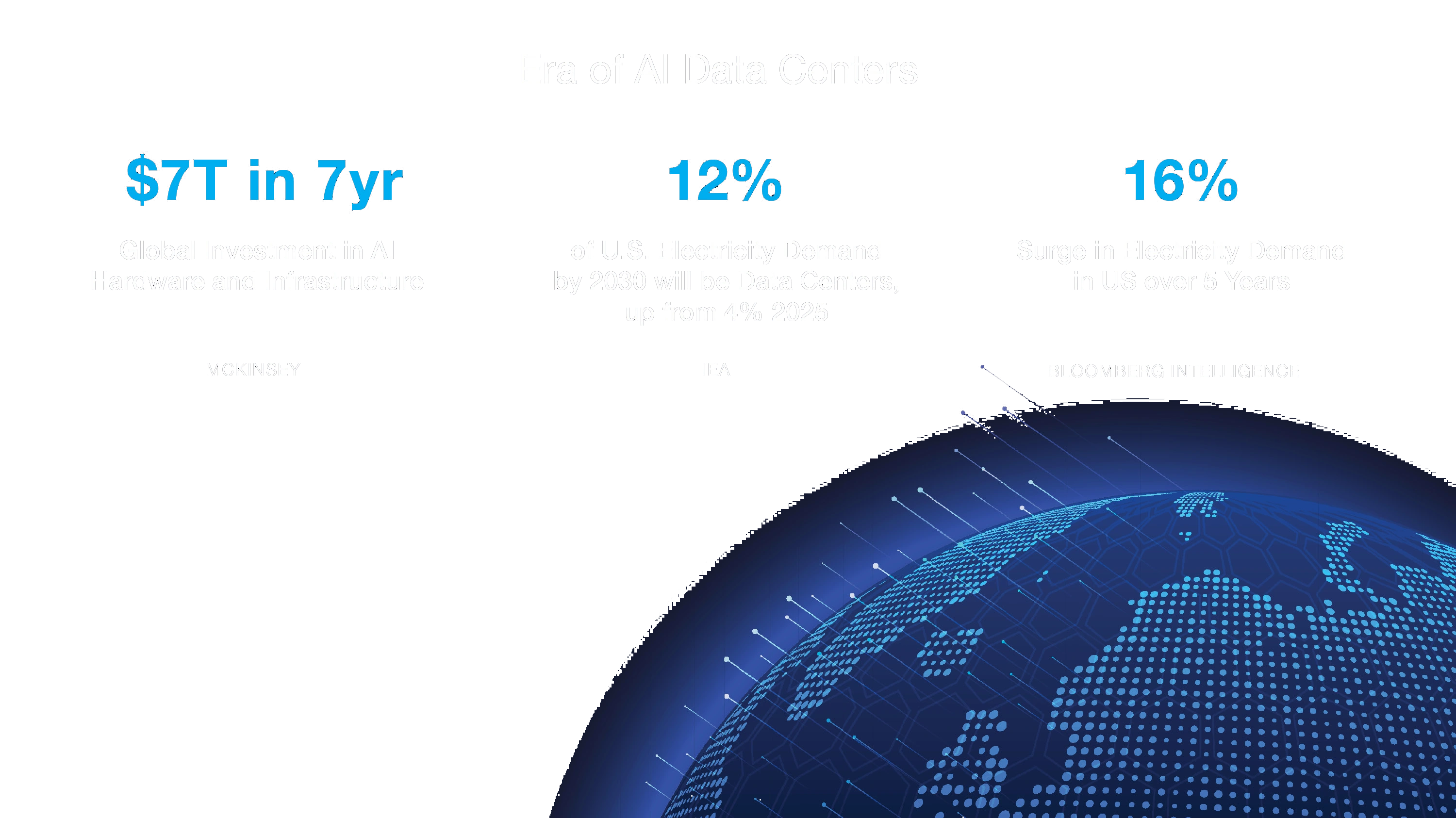
According to McKinsey, global investment in AI hardware and supporting infrastructure represents $7 trillion (T) in investment over the next 7 years. The International Energy Agency (IEA) forecasts the market share of electricity demand in the U.S. from data centers is forecasted to grow from 4% last year to 12% by 2030. Though the electrification of other segments of the economy, such as transportation and buildings, is a key factor, the main driver behind the 16% domestic surge in electricity demand over the next 5 years is these data centers, claims Bloomberg Intelligence.
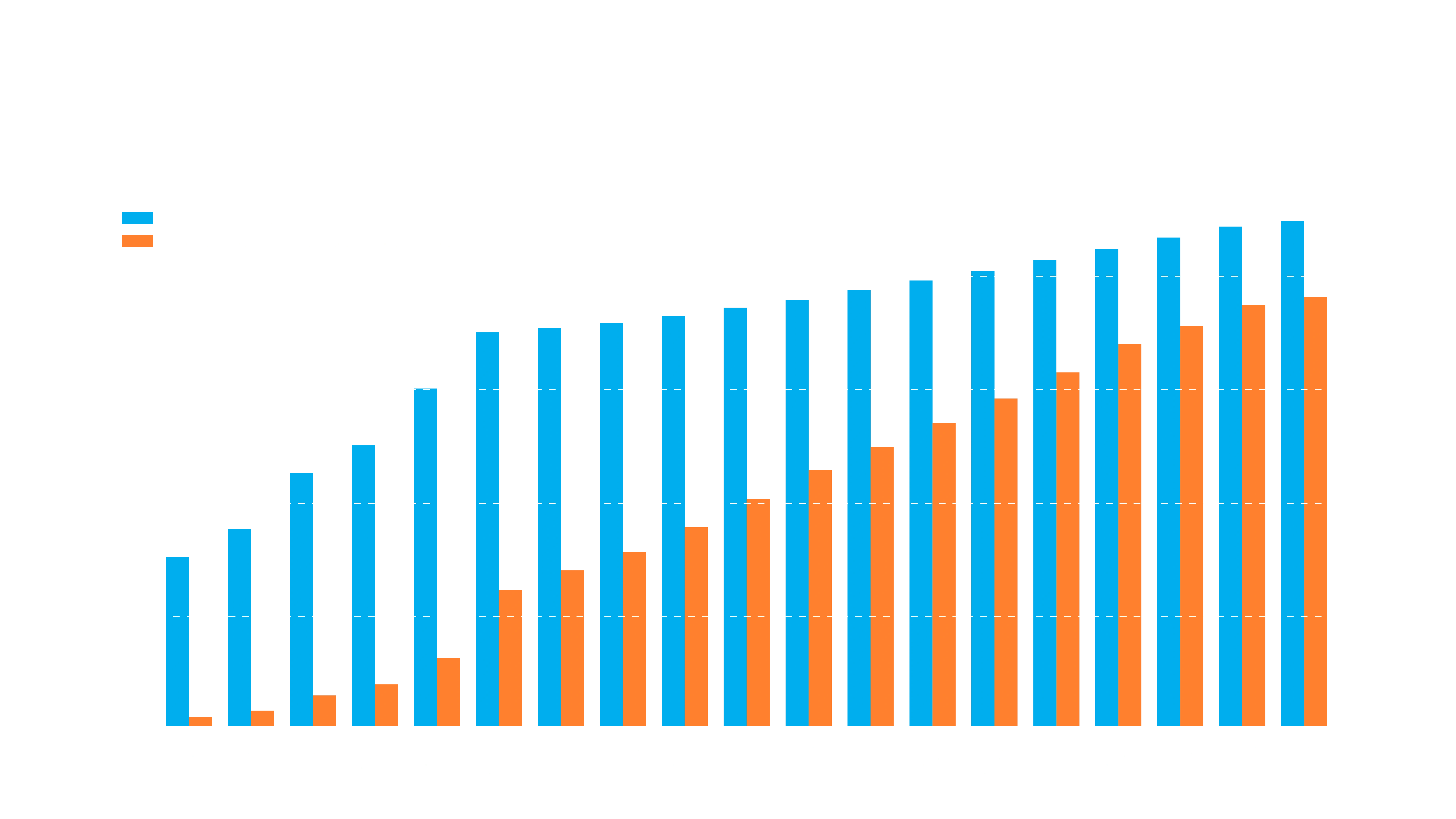
To put this recent growth into perspective, look back in time. Power electronics - a term which refers to the conversion, control, and management of electric power using solid-state switching devices - was once a very small part of the total demand for electricity throughout the world. Most power was generated by large mechanical and centralized power plants. Think coal plants and nuclear reactors. The growth in renewable energy, which often required conversions from direct current (DC) to alternating current (AC) via inverters, rapidly revolutionized the power grid. In fact, the vast majority of peak demand growth today and into the future will be in response to power electronics load growth. Power electronics offer tremendous efficiency and environmental benefits, but make the management of voltage, current, and frequency more complicated. Data centers add a new layer of complexity. Another set of innovative technologies is required today to limit the negative impacts of power electronics on the grid as a whole.
florrent provides a promising technology to help mitigate these issues. The only US-based company producing activated carbon and supercapacitors domestically, florrent offers both sustainability advantages as well as other strategic differentiators that can boost revenues for the data center industry. The technology enables hyperscalers and other data centers to become good grid citizens.
Data centers can be viewed as the penultimate example of how power electronics-based systems can wreak havoc on the power grid. Gyrating spikes in usage internally for data centers are due to Graphics Processing Units (GPUs), specialized electronic circuits capable of the parallel processing of billions of tasks attached to generative AI processes such as chatbots we’re all familiar with (ChatGPT, Claude, etc.). These rapid spikes place extreme stress on grid systems, often not designed to handle the ups and downs in consumption now occurring within milliseconds. Not only do these spikes cause problems that ripple into the wider grid, but for islanded systems, AI spikes can also break behind-the-meter gas power plants, damage transformers, and accelerate the degradation of battery systems to a lifespan of just 3 months. In short, this whiplash of GPU power gives the grid heartburn. This new dynamic is costly to all customers – large and small – connected to the utility grid network.
Outages are on the rise throughout the U.S. For a data center, a single short second blip can cost $10 million (M) due to damaged equipment and interruptions in sensitive data processing. These losses can cascade and drive up rates across the board, including everyday citizens. They degrade the quality of power everyone connected to the grid receives. The end result? A product marred by what has been deemed as “power pollution.”
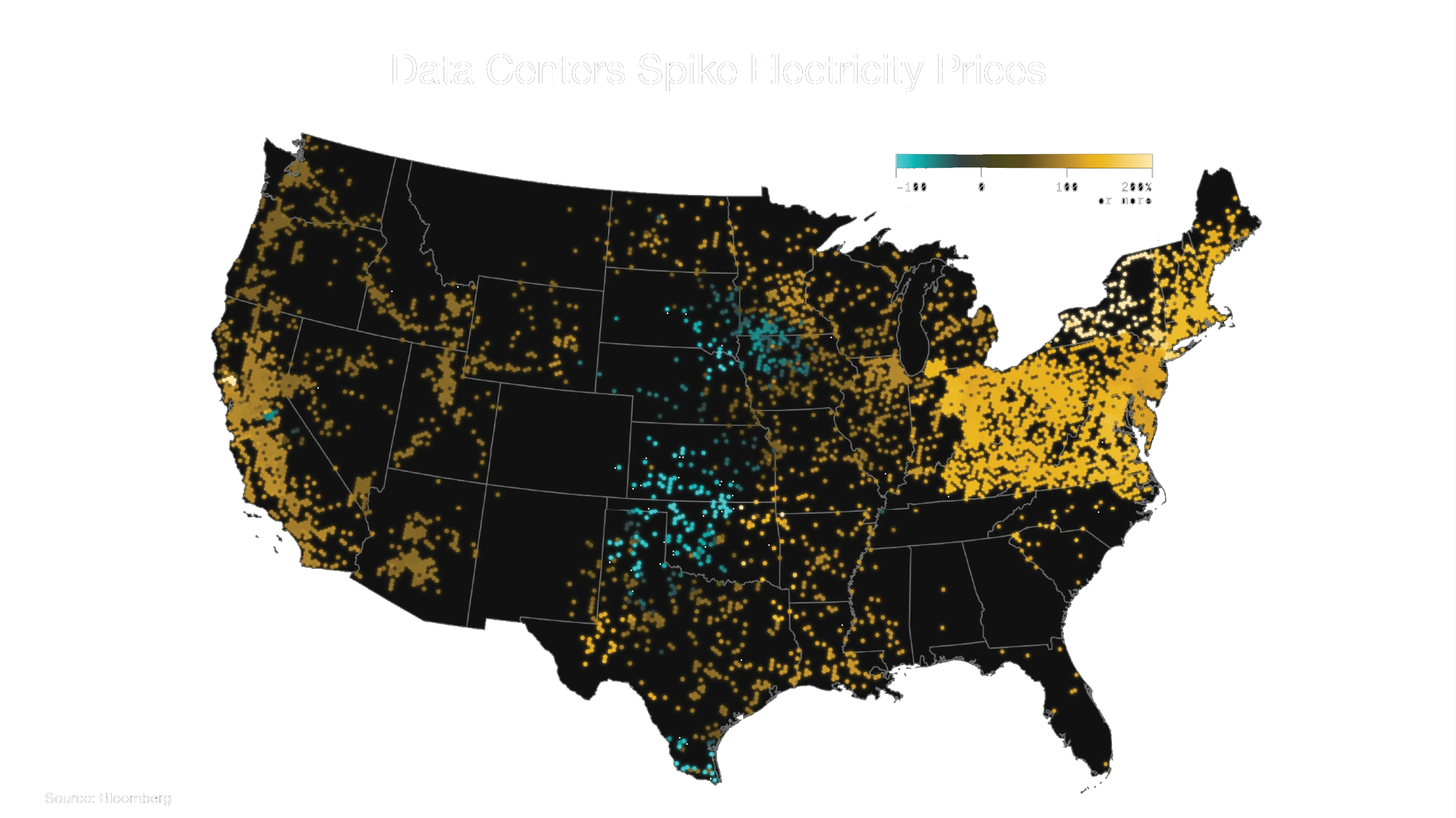
As the map below shows, data centers are the primary cause of power pollution throughout the U.S. (Note the highest concentration of power pollution is in Virginia, known in the industry as “data center alley,” a state that has more data center capacity than any other U.S. state.) If one superimposes the map on power pollution over national data on recent wholesale electricity price increases, one can see a direct correlation. For example, electricity rates in Virginia have increased as high as 267% over the last 5 years. Today, 1 in 100 Americans reside in one of these pollution hotspots.

The power pollution data centers can create is driving the risk of outages up. These supply interruptions, which can also be caused by extreme weather events such as hurricanes, cold spells, heat waves (and resulting wildfires), already cost U.S. businesses approximately $150B a year.

These disturbing statistics are prompting federal regulators to step in and take action. New regulations under discussion at the National Electricity Reliability Council (NERC), the Federal Energy Regulatory Commission (FERC), as well as other regulatory bodies, will require data centers and other large electricity consumers to use new technologies in order to be good grid citizens. The Electric Reliability Council of Texas, for example, has put forward new interconnection rules designed to increase efficiency in the application process by requiring data centers and other large new loads to demonstrate that their projects are real and can limit negative impacts on the grid. This is a sign of things to come. In the future, hyperscaler data centers will need to stabilize their internal processes to minimize external impacts to other customers dependent upon the electricity grid.
Supercaps to the Rescue
Perhaps the most important technology needed to stabilize grids and convert data centers from the object of scorn into good grid citizens is a technology called supercapacitors (also called ultracapacitors). Often lumped into the category of energy storage devices, they are less well known than lithium-ion batteries, which are currently being touted as solutions to the intermittency of renewable resources such as wind and solar.
In short, supercapacitors are high-power storage media. They bridge the gap between electrolytic capacitors and rechargeable batteries. florrent’s products represent the next generation of supercapacitors.
The beauty of this technology for data centers is that it can deliver electricity at 100x the power density of batteries and has 1000x the cycle life of these traditional energy storage devices. Applications of florrent’s supercaps include grid-forming and renewables smoothing. Other supercap use cases include regenerative braking for transportation applications, as well as in cranes and elevators. In an AI data center application, they provide burst-mode power delivery to reduce the wear and tear on the power grid from the gyrating electricity use of data centers.
Here is how Siemens, which is integrating supercaps into transmission-level E-STATCOM systems, described the challenge facing today’s grid networks. “The grid is like the human circulatory system,” said Hans-Gunther Platz, a project manager with Siemens Energy. “Voltage is the blood pressure, current is the blood, and frequency is the heartbeat.” Without supercaps, the forecasted build-out of infrastructure would never be able to address data-center induced “heartburn” or keep pace with what is needed due to looming good grid citizen regulations from NERC, FERC, ERCOT, and others designed to keep voltage, current, and frequency in balance through the creation of “artificial inertia.” In their absence, grid outages would increase in frequency, and electricity costs would drift even higher than already anticipated.
Supercaps tame the electricity spikes associated with AI processing. A technology offered by florrent solves this challenge by converting hypervolatile GPU demand into grid-synchronous power. These supercapacitors respond instantaneously, and due to a different chemistry than Li-ion batteries, they can handle the high-frequency power whiplash of AI processes for years instead of months. As illustrated below, supercapacitors shave the spikes created by data center operations, transforming these large, spikey electric load customers into good grid citizens.
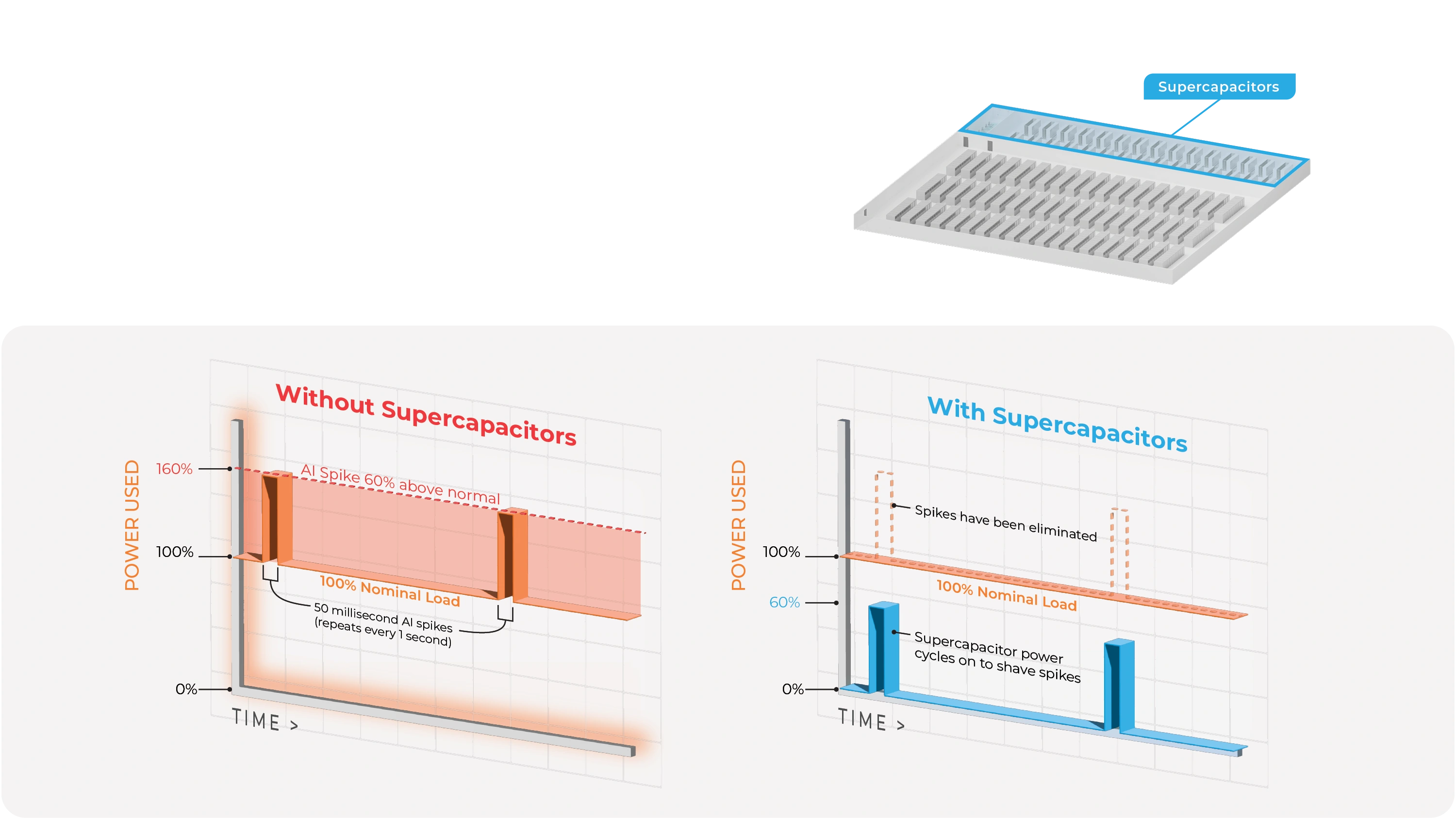
Market leaders in the AI and data center space recognize the need for supercaps and have listed them as a key technology in their current and future reference designs for data centers to serve this electricity-peak-shaving function (see below).
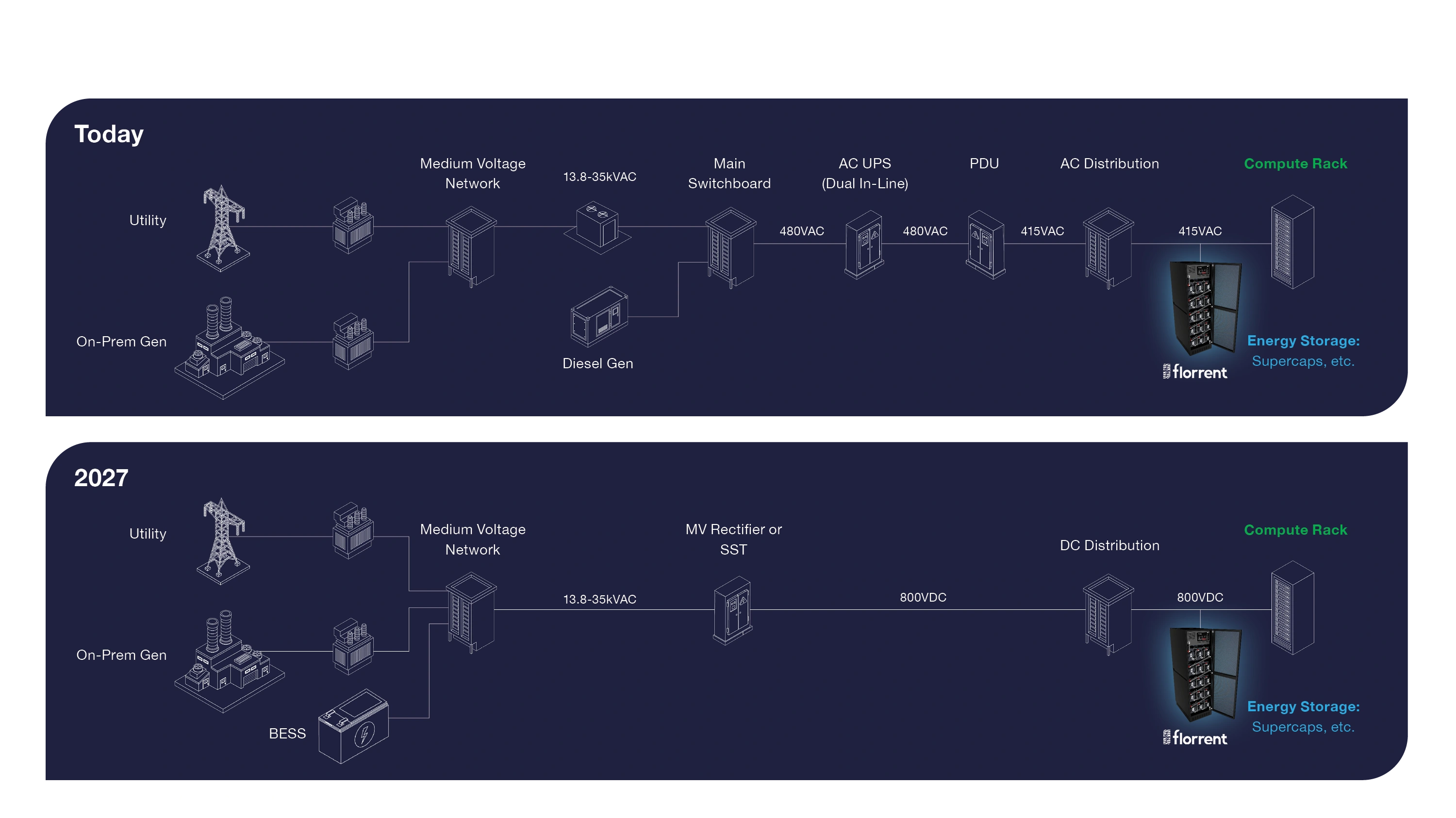
The bottom line for the data center industry is that florrent’s technology is a winner. Why?
- Lower total cost of ownership. When compared to the other supercapacitor competitors
- Best-in-class longevity. Crucial metric for high-cycle AI applications and on-site grid-forming use cases.
- Made in the U.S.A. Increasingly requested by customers in the AI and data center space.
To learn more, please reach out to the florrent team at sales@florrent.com


