Written by Wolfgang Beez, Head of Business Development at florrent
The electrical grid is undergoing its most significant transformation in over a century. Since its inception, the grid’s operational paradigm has been driven by large, centralized power plants generating electricity with predictable system dynamics.
Today, that model has shifted. With multi-gigawatt dynamic loads (AI-driven data centers and electrifying industries), an aging transmission infrastructure, a growing integration of intermittent renewable power generation, and an increase in Distributed Energy Resources (DER), we’re experiencing ever-increasing grid instability.
The Stability Challenge: Frequency & Voltage on the Edge
Traditional power generation provides these critical services: As kinetic energy, rotational inertia. The generators themselves in coal or natural gas plants are spinning masses that historically have worked to stabilize frequency and voltage when the grid system experiences disturbances. With continuous growth of cheap renewable power generation and the retirement of old and inefficient power plants, we lose not only generation capacity but also stability from the inherent rotational inertia they provide.
We now see the consequences of this shifting paradigm in real-world events:
- Virginia, 2024: during a low-frequency disturbance, 60 data centers simultaneously switched to island mode, removing 1.5 GW of load within seconds. The grid narrowly avoided cascading blackouts.
- Ireland, Germany, Texas: similar incidents have shown how uncoordinated drops in hyperscale loads or sudden supply fluctuations can destabilize entire interconnects.
- Iberian Peninsula, April 2025: a massive blackout across Spain and Portugal was triggered potentially as a result of insufficient inertia within the system, insufficient voltage control, and limited cross-border transmission capacity.
These events demonstrate that maintaining frequency, voltage, and inertia under high-stress conditions is now one of the central engineering challenges of the modern grid.
IEEE 1547: The New Rules of Engagement
Historically, DERs were required to disconnect immediately when grid voltage or frequency strayed outside narrow thresholds (IEEE 1547-2003). This “mass tripping” created the risk of worsening instability.
The updated IEEE 1547-2018 standard fundamentally shifts that philosophy:
- Ride-through requirements: DERs must remain online during moderate disturbances.
- Advanced support services: Category III DERs must actively provide reactive power, voltage support, and frequency response.
- Smart disconnection: Only in extreme events (e.g., frequency < 57 Hz) are DERs permitted to drop offline.
This reflects a broader shift: stability is no longer assumed — it must be actively engineered.
The Growing Need for Flexible AC Transmission Systems (FACTS)
As we try to respond to large power demands over long distances, from generation sites to end-users, the transmission system has become a bottleneck.
FACTS devices — including STATCOMs, SVCs, and dynamic line-rating systems — play an increasingly important role in augmenting existing grid infrastructure. By improving controllability, optimizing flows, and managing voltage, FACTS allow operators to get more out of the infrastructure they already have without waiting for decades-long transmission upgrades.
From STATCOM to E-STATCOM: Adding Supercapacitors to the Toolbox
While the traditional STATCOM (Static Synchronous Compensator), provides reactive power for frequency and voltage control.
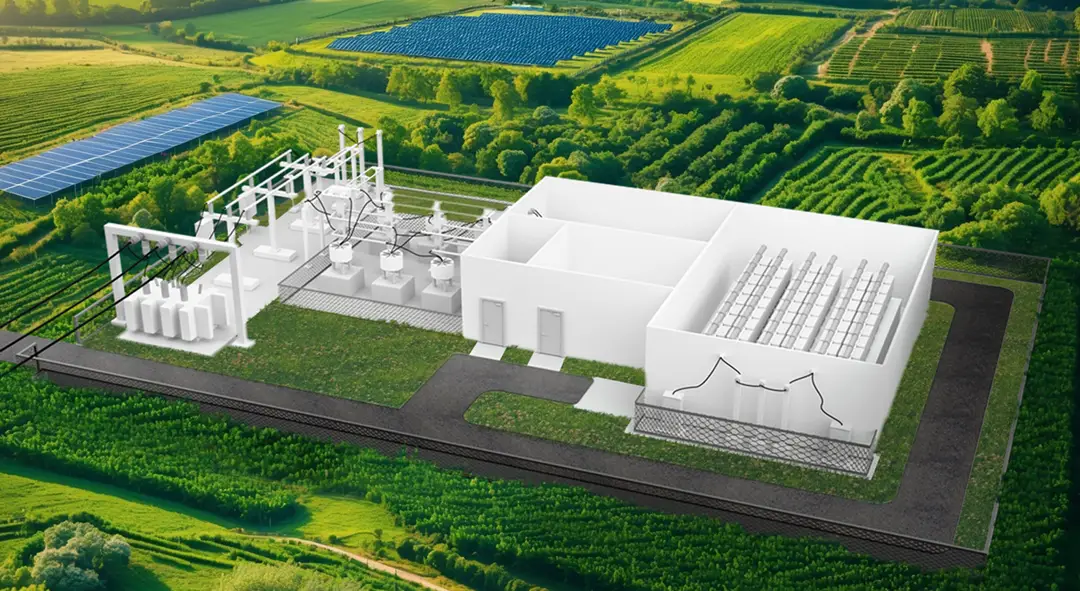
E-STATCOM (“Enhanced STATCOM”) can also provide Active Power, by embedding supercapacitors into STATCOM designs, enabling operators to provide both real and reactive power in milliseconds.
Supercapacitors provide key advantages, including:
- Grid-forming capabilities: Unlike legacy STATCOMs, E-STATCOMs actively contribute to system strength and fault current support.
- Fast frequency response: Supercapacitors provide instant active power during inertia loss and frequency events — something traditional STATCOMs cannot do.
- Stacked value: These systems stabilize frequency, regulate voltage, and provide fault current support simultaneously.
In short, supercapacitors turn a STATCOM from a passive stabilizer into an active grid participant.
Behind-the-Meter Supercapacitors: Power Quality & Shaving for Dynamic Loads
While E-STATCOMs provide system-level resilience, supercapacitors also deliver value behind the meter for large energy users. Supercapacitors can:
- Handle periodic load spikes from GPU clusters and industrial processes while smoothing power draw from the grid.
- Improve power quality and system uptime for critical facilities such as data centers, fabs, and AI training hubs.
- Enable momentary ride-through during voltage dips, avoiding expensive generator startup events.
- Support peak shaving strategies to reduce demand charges, improving cost efficiency.
florrent & The Road Ahead
Grid operators, policymakers, and technology innovators are converging on the same reality: we must actively manage grid stability while augmenting the existing infrastructure. Germany’s TSOs are investing heavily in E-STATCOM deployments, Texas regulators are exploring data center ride-through mandates, and U.S. utilities are re-evaluating IEEE 1547 compliance in light of new load dynamics.
This is where supercapacitor innovation becomes critical. As dynamic loads accelerate and transmission constraints grow, the industry needs solutions that are power-dense, modular, and scalable. That’s where florrent contributes: by delivering next-generation supercapacitor technologies purpose-built for grid-forming, fast-response applications that enhance both front-of-the-meter and behind-the-meter resilience.
Rather than replacing infrastructure, we’re augmenting it — unlocking more performance from the grid we have today while preparing for the demands of tomorrow.


